• TOP
  • News
  • Industry Column
  • Flame-Retardant Material Selection in an Era of Antimony Market Volatility and Tightening Environmental Regulations — Introducing PFAS-Free, Halogen-Free, and Antimony-Free Solutions

Flame-Retardant Material Selection in the Era of Antimony Market Volatility and Environmental Regulations 
ー A New Option: PFAS-, Halogen-, and Antimony-Free Solutions

2026.04.02

Flame retardance selection in the era of antimony market fluctuations and environmental regulations

Industry Columns


As a result, more materials currently meet performance requirements but carry significant future risks in terms of regulations, supply stability, and cost.

Flame-retardant material selection for electrical, electronic, and automotive applications has reached a turning point.

Rising antimony prices, tightening PFAS regulations, and accelerating demand for halogen-free solutions are exposing conventional flame-retardant PET, PBT, and ABS to growing procurement, regulatory, and cost risks. In this column, we examine these market and regulatory trends and introduce next-generation alternatives featuring LEONA™ (PA) and XYRON™ (modified PPE).

XYRON™ Grade Overview for OA Equipment 

XYRON™ S2 Needle Flame Test Data 

 LEONA™ PN Series Overview 

EV Battery Design Solutions

Why Now Is the Time to Reconsider Flame-Retardant Materials

Changes in regulations and customer requirements

  • PFAS regulations (Early response by European and global OEMs)
  • The growing demand for halogen-free products.
  • Accountability across the entire supply chain

Soaring antimony prices and supply risks

  • Antimony trioxide is widely used in Flame retardance PET, PBT, and ABS.
  • Price increases and supply chain instability
  • Increased risk of fluctuations in material costs

Regulatory and supply chain pressures are converging at once. On the regulatory side, PFAS restrictions are tightening — with early action already underway from European regulators and global OEMs — halogen-free requirements continue to expand, and chemical accountability expectations are increasing across entire supply chains.

On the supply side, antimony trioxide — widely used as a flame-retardant synergist in PET, PBT, and ABS — is experiencing rising prices and growing supply instability, creating significant material cost exposure.

The result: many currently compliant materials carry serious future risks around regulation, supply reliability, and cost.

Challenges with Conventional Flame-Retardant PET, PBT, and ABS

Flame-retardant PET, PBT, and ABS have long been the workhorses of electrical and electronic component manufacturing. But their raw material composition and flame-retardant chemistry are increasingly exposing manufacturers to regulatory and cost risks that weren't a concern a decade ago.

Main challenges

  • Environmental and Regulatory Risk from Halogen-Based Flame Retardants
    Halogen-based flame retardants face growing scrutiny over environmental impact and the potential for future restrictions. Halogen-free requirements are strengthening year over year across global markets, and materials that don't meet this bar are becoming harder to specify with confidence.
  • PFAS Regulatory Exposure
    Rising concern over the environmental and health effects of PFAS has significantly increased the risk of future regulatory action. For manufacturers, this is also creating a growing administrative burden — fielding customer inquiries, preparing regulatory documentation, and staying ahead of disclosure requirements.
  • Electrical Performance Limitations
     Flame-retardant ABS offers excellent moldability, but its electrical properties can be a limiting factor in high-frequency applications. Active material reconsideration is already underway in communications equipment and RF-related components as performance demands increase.
  • Environmental and Regulatory Risk from Halogen-Based Flame Retardants
    Halogen-based flame retardants face growing scrutiny over environmental impact and the potential for future restrictions. Halogen-free requirements are strengthening year over year across global markets, and materials that don’t meet this bar are becoming harder to specify with confidence.
  • PFAS Regulatory Exposure
    Rising concern over the environmental and health effects of PFAS has significantly increased the risk of future regulatory action. For manufacturers, this is also creating a growing administrative burden — fielding customer inquiries, preparing regulatory documentation, and staying ahead of disclosure requirements.
  • Electrical Performance Limitations
    Flame-retardant ABS offers excellent moldability, but its electrical properties can be a limiting factor in high-frequency applications. Active material reconsideration is already underway in communications equipment and RF-related components as performance demands increase.

Alternative Option 1: LEONA™ (Flame-Retardant PA)

LEONA™  is a polyamide (nylon) material with a proven track record of delivering high mechanical strength and heat resistance. Its flame-retardant grades use a halogen-free formulation, balancing strong performance with the environmental and regulatory compliance that global markets increasingly demand.

Key Features

  • 環境負荷低減
    環境負荷低減と規制対応を意識した難燃設計が可能です。
    全グレードPFASフリーの設計、ハロゲンフリー・アンチモンフリーのグレードもラインナップしている為、グローバル市場での採用を見据えた材料選定に適しています。
  • 高い機械強度・耐熱性
    PETやPBTでは達成できない強度や耐熱性を実現する選択肢となります。
    機構部品や電装部品での置き換え実績があります。
  • Extensive experience in electrical and electronic components.
    Due to its high CTI (Computer Telephony Integration) capability, it contributes to miniaturization of products by shortening creepage distances.
    Therefore, it has a proven track record of being adopted primarily in connectors and electrical equipment applications.
  • Reduced Environmental Footprint
    LEONA™ flame-retardant grades are available in halogen-free, antimony-free, and PFAS-free formulations — making them well-positioned for material selection in markets where chemical regulatory requirements are tightening and customers are scrutinizing supply chain composition more closely than ever.
  • High Mechanical Strength and Heat Resistance
    LEONA™ delivers strength and heat resistance that can exceed conventional PET and PBT, and has been successfully adopted as a replacement material in both mechanical and electrical components where performance demands are high.
  • Proven Track Record in Electrical and Electronic Applications
    With high CTI ratings, LEONA™ allows for shorter creepage distances, directly supporting component miniaturization. It has a long history of adoption in connectors and electrical components where reliability and dimensional precision are critical.

Note: "Halogen-free" on this page indicates that iodine (I), bromine (Br), and chlorine (Cl) are not intentionally added.

Alternative Option 2: XYRON™ (Modified PPE)

XYRON™ is emerging as a forward-looking flame-retardant material option, distinguished by its fully PFAS-free, halogen-free, and antimony-free design — addressing three of the most pressing material risks in a single solution.

Key Features

  • Flame retardance design that does not use antimony
    Because the formulation does not rely on antimony trioxide, this material is less susceptible to fluctuations in antimony prices.
  • PFAS-free, halogen-free
    By designing materials that do not contain PFAS or halogens, it is possible to select materials that take into account regulatory trends that require restrictions and reporting obligations on the use of chemical substances.
    In particular, it is a readily available option for applications that require compliance with regulations that scrutinize the chemical composition of materials, such as those exemplified by Safer Products for Washington (SPW) in the United States.
  • low water absorption and high dimensional stability
    It exhibits minimal changes in physical properties due to water absorption, maintaining stable dimensional accuracy.
    Suitable for precision parts and thin-walled designs.
  • Lightweight and electrical properties
    It has a lower specific gravity compared to PET and PBT, contributing to weight reduction.
    Furthermore, it also possesses excellent electrical properties required for high-frequency applications.

  • Antimony-Free Flame-Retardant Design
    Formulated without antimony trioxide, XYRON™ is not subject to the price volatility and supply uncertainty currently affecting antimony markets.
  • PFAS-Free and Halogen-Free
    Contains no PFAS or halogen substances, enabling compliant material selection as chemical disclosure and restriction regulations tighten globally. Particularly well-suited for applications where compliance with programs like Washington State’s Safer Products for Washington (SPW) is a key consideration.
  • Low Water Absorption and High Dimensional Stability
    Minimal property change due to moisture absorption means reliable dimensional accuracy in service — a strong fit for precision components and thin-wall designs.
  • Lightweight with Excellent Electrical Properties
    Lower specific gravity than PET and PBT contributes to weight reduction, and its electrical properties make it well-suited for high-frequency applications.

 Explore XYRON™ Flame-Retardant Grades

Is Your Material Strategy Ready for What's Next?

If any of these challenges sound familiar, LEONA™ and XYRON™ were designed with you in mind:

  • Concerned about material cost exposure from antimony market volatility
  • Navigating tightening PFAS and environmental regulations
  • Facing customer or OEM demands for halogen-free materials
  • Evaluating alternatives to conventional flame-retardant PET, PBT, or ABS

Flame-retardant material selection has evolved well beyond simple UL compliance. Today's decisions require a comprehensive evaluation that accounts for environmental regulations, raw material risk, and long-term supply stability. LEONA™ and XYRON™ — engineered to be PFAS-free, halogen-free, and antimony-free — are built for this new reality.

Contact us to discuss feasibility studies, request evaluation data, or explore the right fit for your application.


Ready to learn more? Reach out using the form below and a member of our team will follow up shortly.

Contact Us

Related information

Resolver

×

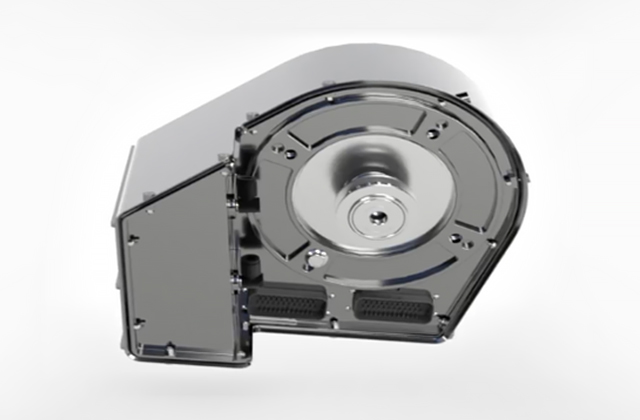
Rotation angle sensor connected to a high-speed rotating motor.
Close to heat sources, heat resistance and strength are required.

https://www.asahi-kasei-plastics.com/wp-content/uploads/2023/11/Resolver.jpg

Products

14G33

Features

  • Heat resistance
  • High strength
  • Chemical resistance

Wire harness protector

×

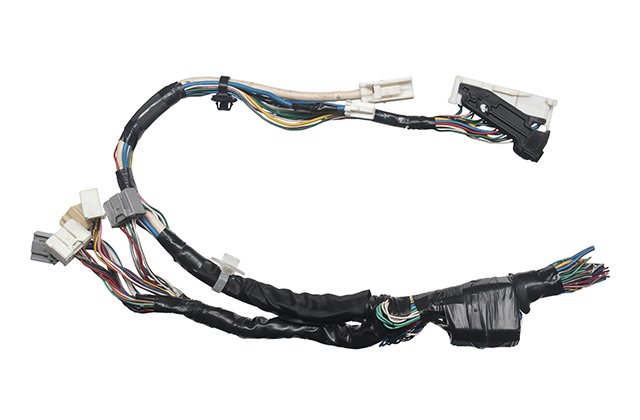
Covers installed to protect automobile wiring harnesses and improve assembly.
They are also installed under the floor and must be impact and chemical resistant.

https://www.asahi-kasei-plastics.com/wp-content/uploads/2023/11/wire-harness-protector.jpg

Products

TR161

Features

  • Impact resistance
  • Chemical resistance
  • Molding properties

Motor cover

×

The cover that houses the drive motor of an electric car.
Piping for cooling water to cool the motor is also installed inside. Since cooling water passes through it, it must have low water absorption and hydrolysis resistance.

https://www.asahi-kasei-plastics.com/wp-content/uploads/2023/11/motor-cover.jpg

Related articles

Products

53G33

Features

  • Low water absorption
  • Hydrolysis resistance
  • Calcium chloride resistance 
  • High mechanical strength

Three phase connectors

×

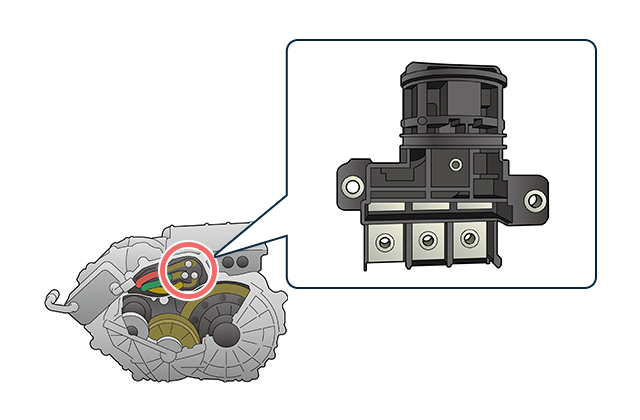
Three phase connector to be mounted inside the drive motor.
Ion migration resistance, flame retardance, and tracking resistance are required because of the high power flow, safety, and miniaturization requirements.

https://www.asahi-kasei-plastics.com/wp-content/uploads/2023/11/three-phase-connector.jpg

Related articles

Products

SN11B

Features

  • Ion migration resistance
  • Flame retardancy  (UL94 V-0)
  • Tracking resistance (CTI 0)
  • Toughness at low temperatures, Impact resistance

High-voltage connectors

×

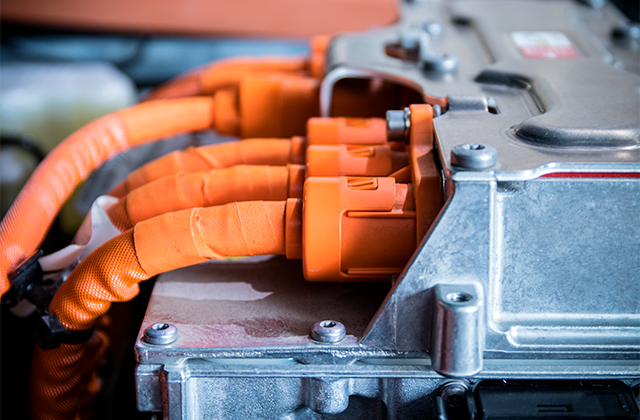
High-voltage connectors used around the batteries of electric vehicles.
Orange color is required to alert the user to the high voltage. Flame retardancy and tracking resistance are required.

https://www.asahi-kasei-plastics.com/wp-content/uploads/2021/03/highvolt.png

Products

SN11B

Features

  • Excellent surface appearance
  • Flame resistance
  • Tracking resistance (CTI 0)
  • Toughness at low temperatures, Impact resistance

Connector

×

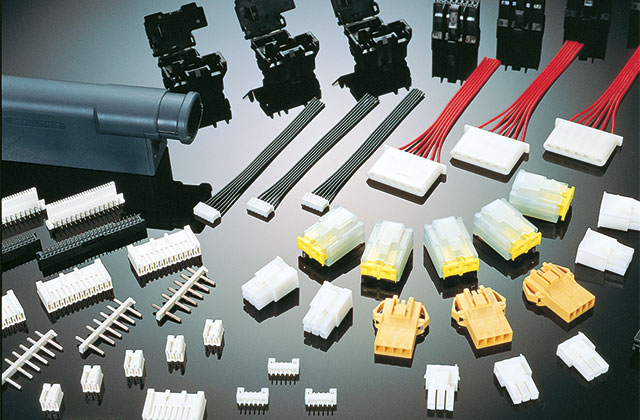
Components and devices used to connect cables to each other and to connect power and electrical signals.
Flame resistance, tracking resistance, strength, toughness, etc. are required.

https://www.asahi-kasei-plastics.com/wp-content/uploads/2021/03/connector.jpg

Related articles

Products

SN11B,SN103 (SN series)

FR200,FR650 (FR series)

FG170,FG172,FG171,FG173 (FG series)

Features

  • Flame resistancy (V-0)
  • Electrical properties (CTI PLC0)(SN11B, SN103)
  • High strength and toughness
  • Good moldability
  • Glow wire resistance (FR650、SN11B)

Motor end cap

×

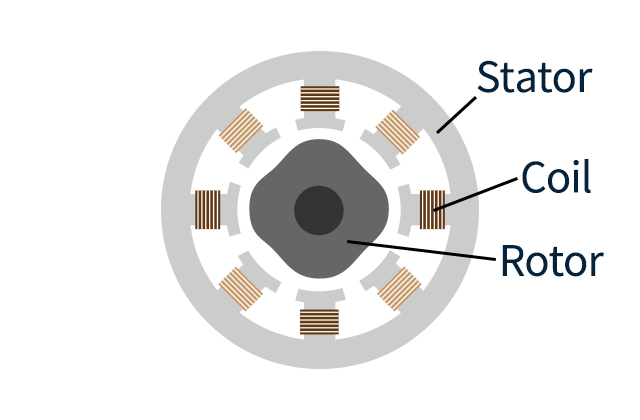
Caps attached to the ends of various motors to protect internal parts and windings.
Heat resistance and strength are required.

https://www.asahi-kasei-plastics.com/wp-content/uploads/2021/03/motorend.jpg

Products

1300G

Features

  • Heat resistance
  • High strength and toughness
  • Electrical properties (high CTI)
  • Good moldability
Asahi Kasei Engineering Plastics Asahi Kasei introduces engineering plastics and functional resin products. We mainly handle polyacetal (POM) resins, polyamide (PA, nylon) resins, and modified polyphenylene ether (PPE) resins, and provide resin design reference information, case studies, industry trends, etc. Asahi Kasei Corporation Asahi Kasei Engineering Plastics