This section provides an overview of the fundamentals of engineering plastics and CAE, as well as the latest information on engineering plastics industry.
For inquiries regarding SDS and various chemical substance surveys, please submit your request through your trading company or other purchasing route. We appreciate your understanding and cooperation.
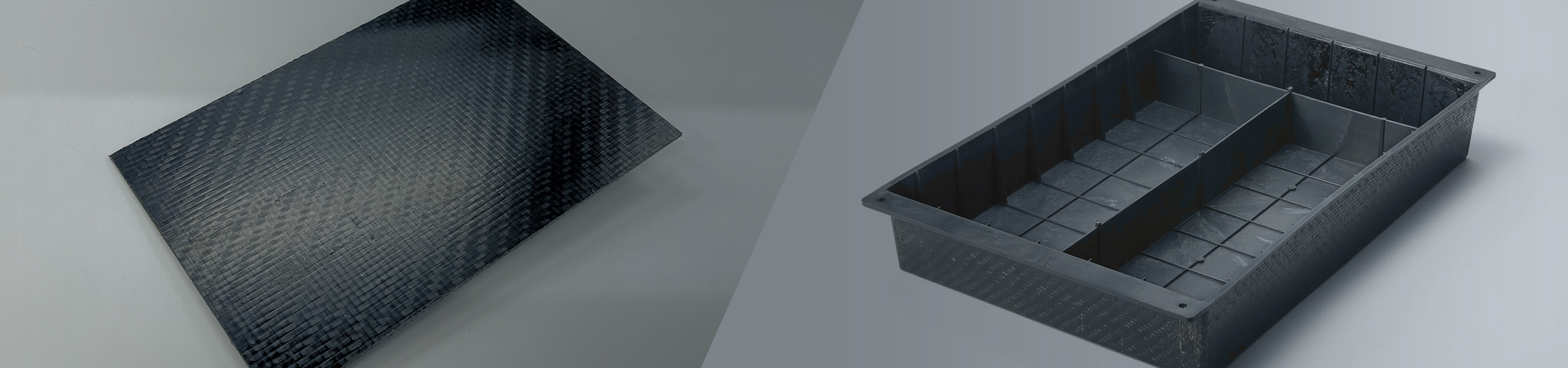
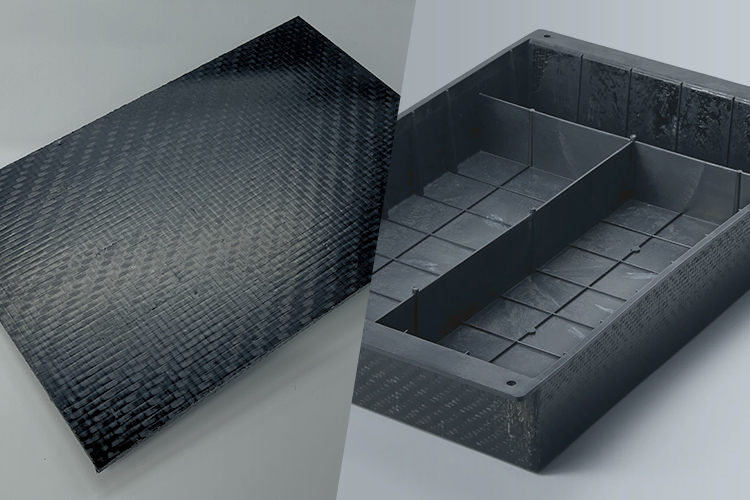
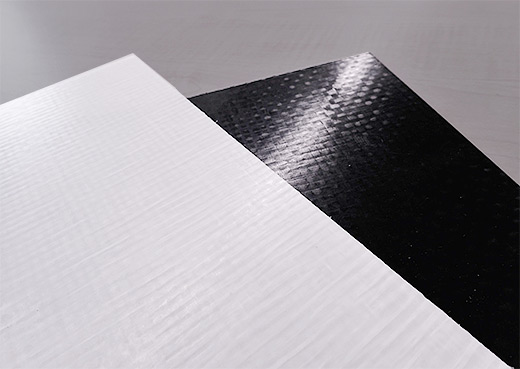
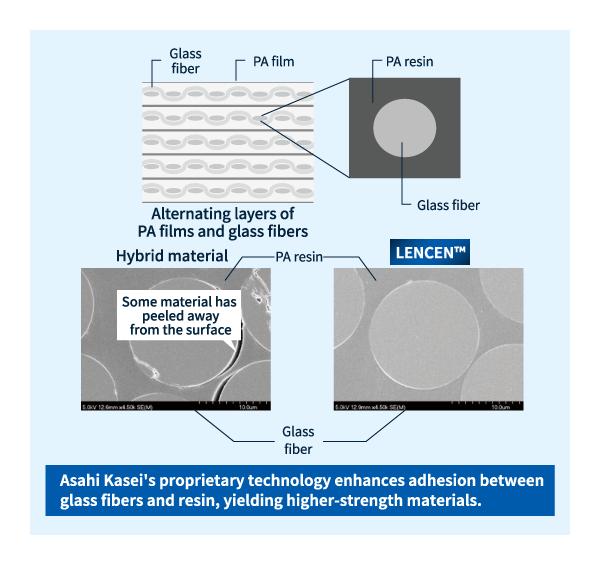
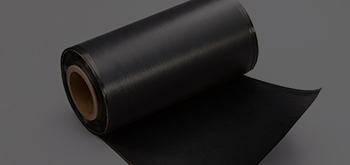
LENCEN™ (c-GFRTP) is a continuous glass fiber reinforced thermoplastic formed by stacking layers of a continuous glass fiber textile with polyamide-66 (PA66) films.
Continuous fiber reinforced thermoplastic is a composite material formed by impregnating glass fiber textiles or similar fabrics with thermoplastic resin, then solidifying to yield a sheet-shaped product, and also known as a composite, organo-sheet or prepreg. The acronym for Continuous Glass Fiber Reinforced thermoplastic is c-GFRTP (the first c is lowercase), but there are other notations such as GFRTP and GFRP.
Key features and manufacturing process of LENCEN™ (c-GFRTP)
The features and manufacturing process of LENCEN™, prepreg product formed by stacking layers of a continuous glass fiber textile with polyamide-66 (PA66) films, are introduced here.
High strength and rigidity
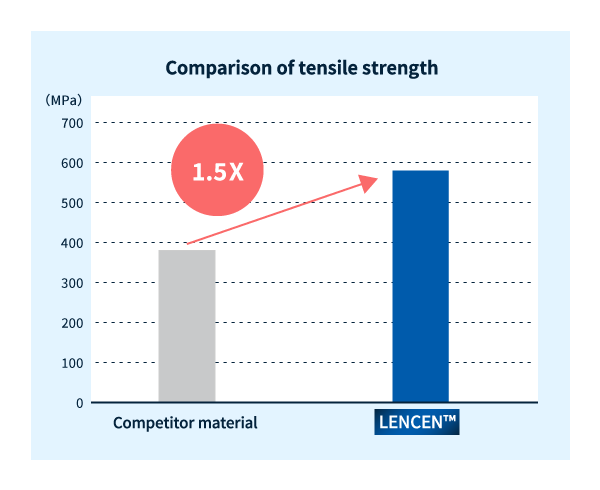
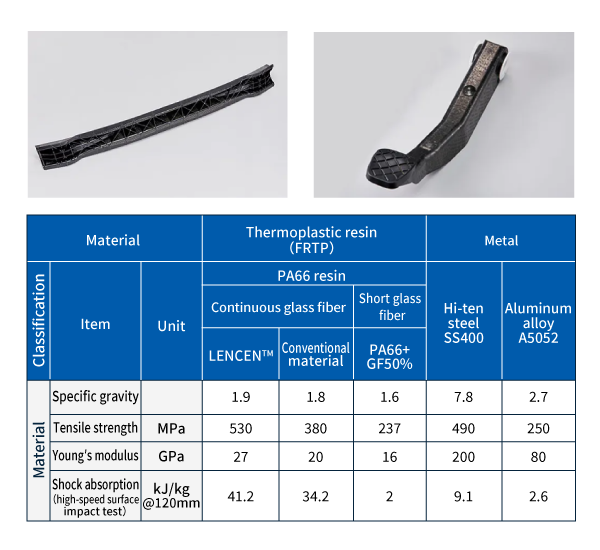
Asahi Kasei's proprietary technology enhances adhesion between glass fibers and resin, yielding higher-strength materials. Because the tensile strength and shock absorption of LENCEN™ fiber-reinforced thermoplastics are comparable or superior to those of metals, these materials increase impact safety while reducing weight, helping to improve reliability and fuel efficiency.
High strength and rigidityTensile strength
Flame resistance
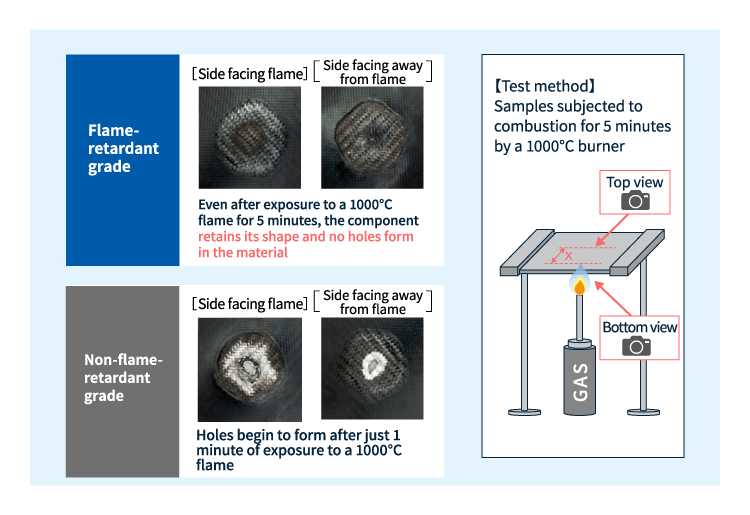
Flame-retardant grades withstand burner-flame tests (1000°C, 5 minutes) with no holes appearing in the material. As one example, if an electric-vehicle battery suffers a thermal-runaway event, this material will slow the spread of flames, helping protect passenger safety.
Burner-flame tests
Manufacturing process
LENCEN™ is produced via the following procedure.
Layering: Layers of glass fiber fabric or other reinforcing fibers are stacked together with resin-film layers.
Heating/pressurizing: The layer stack is heated and pressurized in a press, causing the resin to melt.
Impregnation: The molten resin soaks through glass fibers.
Finally, the product is cooled to solidify the resin, yielding sheet of material ready for molding.
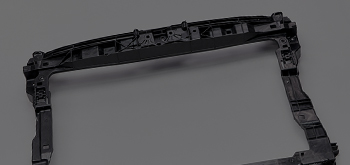
Also, because PA66 are thermoplastic resins, they can be combined with injection molding of materials of similar types (hybrid of composite and injection molding, composite sheet overmolded with injection molding). This allows formation of complex-shaped parts such as ribs and flanges, offering the possibility of cost reductions thanks to improved component rigidity and better integration with neighboring components.
【What is prepreg?】 Prepreg is a term used to refer to sheet of molding material manufactured via the impregnation process described above. The term organo-sheet is also used. The combination of materials used to produce prepreg may be chosen in many ways. For the resin films, common choices include thermoplastic resins such as polyamide or polypropylene; thermosetting resins may also be used. For the reinforcing fibers, common choices include glass fibers and carbon fibers, which may be woven into continuous fiber textiles or aligned in uni-directional (UD) configurations; non-woven (random) configurations of chopped fibers are also used.
LENCEN™ (c-GFRTP) Solutions
01
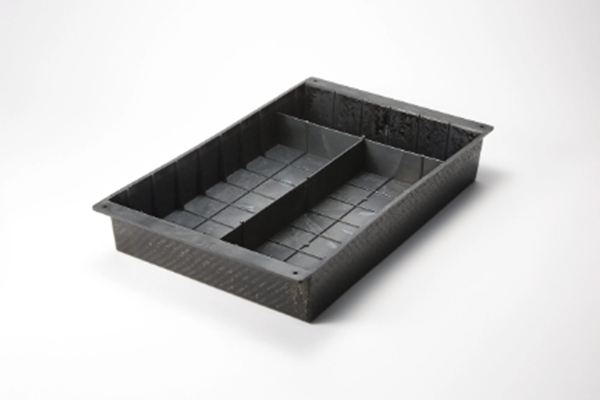
For Battery Cases
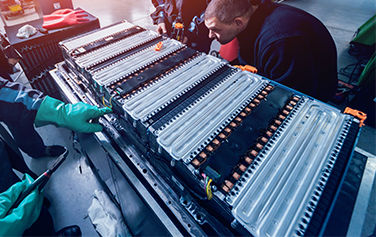
Battery cases in electric vehicles are typically made from metals such as steel or aluminum. The goal of reducing component weight to extend vehicle travel distance suggests the possibility of switching to resin materials, but typical resins cannot offer the required thermal resistance; also, cost reduction is a perennial issue.
"LENCEN™" is
It is lightweight, with a specific gravity of about 1/4 that of iron. (Specific gravity: LENCEN™ 1.9, iron 7.9, aluminum 2.7)
No holes were found in a combustion test at 1000℃ for 5 minutes.
It is possible to consolidate and reduce the number of materials required for steel casings, preventing cost increases. ■ Upper cover: Potential to reduce anti-rust paint and insulation ■ Lower case: Potential for undercover reduction
Battery case
02
Lighter Bumper Beams and Brake Pedals
Metals such as iron and aluminum are used in parts like bumper beams and brake pedals, leaving many possibilities for weight reduction.
These components require materials with excellent strength, stiffness, impact, and durability. We believe that LENCEN™ that combine these characteristics are suitable.
Iron bumper beams require post-processing, such as bending or welding with separate parts, but this material can reduce weight, as well as the number of processes and parts.
LENCEN™ has excellent strength, stiffness, impact, and durability.
03
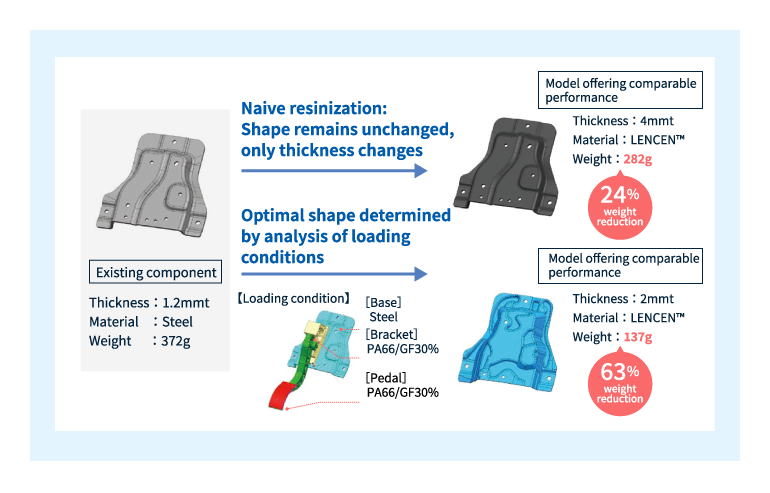
Shape optimal through CAE analysis
Shape optimization using Asahi Kasei's proprietary CAE technology can reduce component weight even further.
Example: Accelerator-pedal component
04
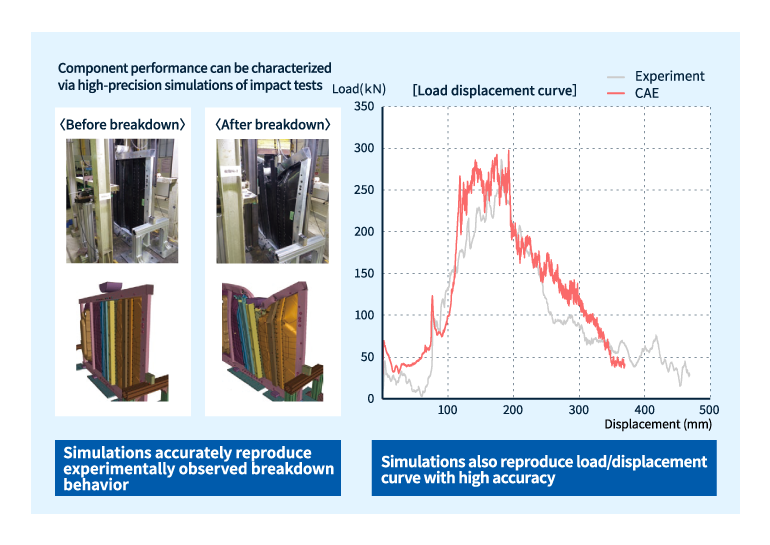
CAE impact analysis
For a battery-cover component subjected to a side-impact test, CAE modeling accurately reproduces rupture behavior and energy absorption at time of impact.